FEATURED SCREENS
What shipped
01
02
03
04
05
06
07
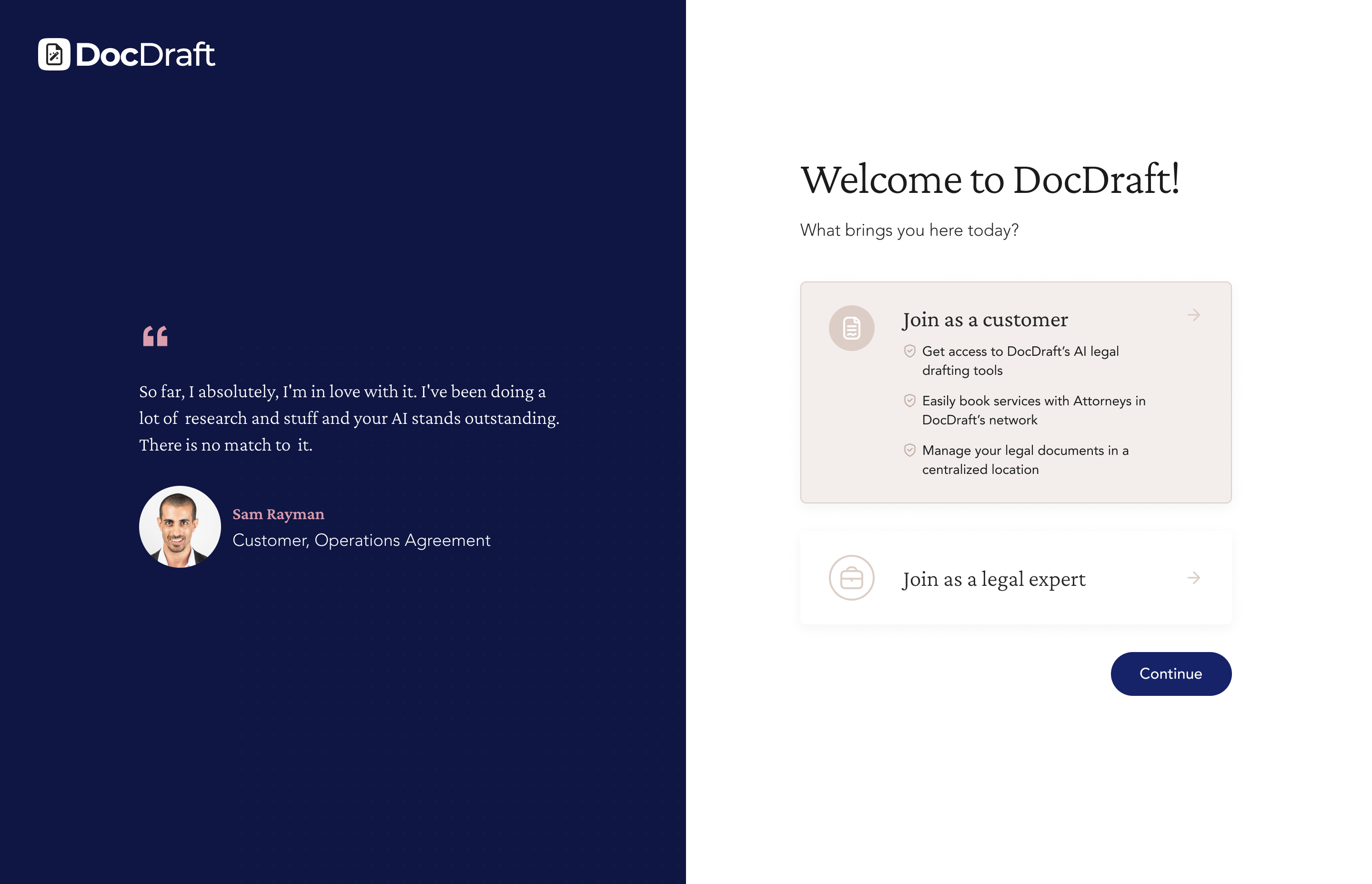
DocDraft set out to be the first AI-enabled general counsel for small businesses, a "TurboTax for legal help." As founding designer, I shaped the product from 0 to 1: an AI-guided experience, built around trust, for people facing legal matters without in-house counsel or an affordable alternative. New customer acquisition grew from one or two a week to 60 to 100 a week, an average growth rate of 70% month over month.
Legal help tends to come in two sizes: do it yourself, or hire a firm. Most small businesses have real legal needs that fit neither. Handling it alone is risky, and a firm costs more than they can afford. Individuals run into the same wall. Most people going through a divorce or custody dispute end up representing themselves, not by choice, but because nothing sits in between.
The need was never missing. The gap was an affordable middle option that allowed individuals to own their legal matters from beginning to end.
Adaptive, step-by-step questions let DocDraft serve the long tail of legal needs, something fixed-template tools can't do.
A lawyer was within reach at every stage.
As the sole designer, I shaped product direction alongside engineering and our legal team from the very beginning.
Being open about what came next, before asking for any commitment, earned more trust than hiding the complexity.